

Best Seeds for Cold-Pressed Oil in India and Their Health Benefits

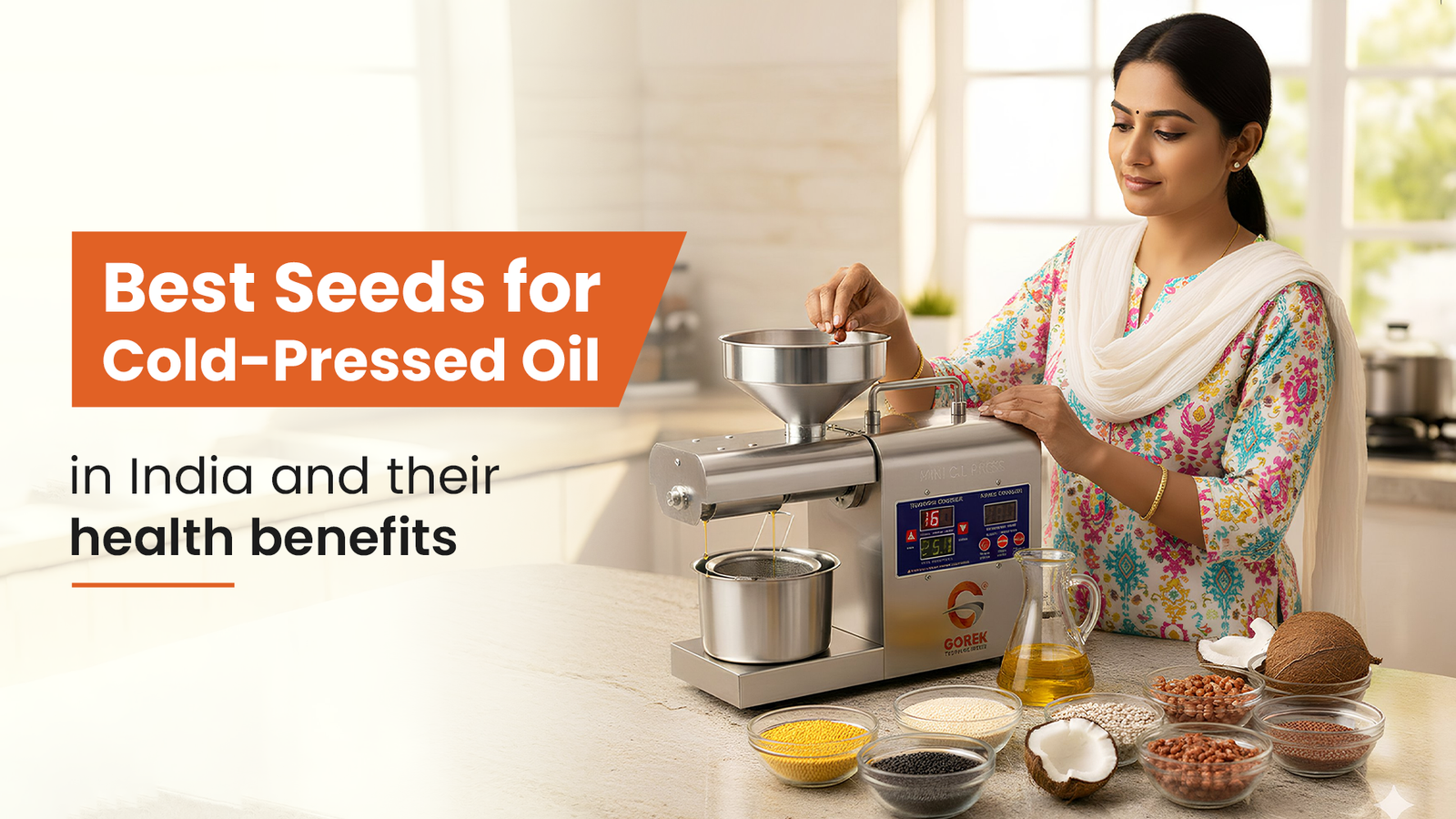
For decades, Indian kitchens relied on traditional oils extracted locally from seeds grown nearby, but refined oils eventually took over mainly because they were cheaper, looked clearer, and were marketed as “modern”. The shift has resulted in a loss of something important, which is why cold pressed oils are making a comeback, and with good reason.
Since cold pressed oils are extracted slowly without chemicals or excessive heat, they retain their natural nutrients, aroma, and character. However, the quality of cold pressed oils is not just dependent on the machine, but also on the seeds.
Let’s look at the most commonly used seeds and why
they are important for cold pressed oil in Indian homes.
Groundnut (Peanut): The Everyday Indian Oil When groundnut oil is cold pressed, it has a stronger aroma, a richer taste, and enhances satiety after meals. Groundnut oil is probably the most familiar oil in Indian households, especially in western and southern regions.
The healthy fats in groundnut oil support heart health from a health perspective. People find that food cooked in cold pressed groundnut oil feels lighter than food cooked in refined versions. It can be used for daily cooking, as well as sabzis, curries, and even shallow frying.
Mustard Seeds: Strong, Traditional, and Medicinal Mustard oil has always had a bold personality. Loved in North and East India, it is often avoided by people who are used to neutral oils but cold pressed mustard oil is incredibly powerful for health. In traditional Indian households, mustard oil was used not only for cooking but also for massages and seasonal remedies.
It naturally contains omega-3 fatty acids. Cold pressed mustard oil keeps its natural pungency and warmth, which helps digestion and improves metabolism. It’s especially suitable for winter cooking, pickles, and traditional recipes.
Sesame (Til): Quietly Powerful Sesame oil doesn’t shout, but it works deeply. According to Ayurveda, sesame oil is one of the most balanced oils for the human body. Cold pressed sesame oil is rich in antioxidants and minerals that support bone strength and joint health. Many people dealing with digestion issues or joint discomfort find sesame oil easier on the body when used regularly. It is commonly used in South Indian cooking, but even small amounts in everyday meals can make a difference, It also doubles up as a massage oil, which shows how versatile and natural it is.
Coconut Copra: More Than Just a Cooking Oil Cold pressed coconut oil, especially from dried copra, is widely used in coastal regions. Unlike refined coconut oil, the cold pressed version retains its natural fragrance and beneficial fatty acids. Coconut oil is known for providing quick energy and supporting brain function. It’s also popular for hair care and skin use, which again highlights the purity of cold pressed extraction. It’s ideal for South Indian dishes, light sautéing, and even baking when used correctly.
Sunflower Seeds: Light and Neutral Sunflower oil often gets a bad reputation because of over-refining. However, cold pressed sunflower oil is a completely different product. It is lighter, easier to digest, and rich in vitamin E. For people who prefer oils that don’t overpower the taste of food, sunflower seed oil can be a good option when cold pressed properly. It works well for simple home cooking and low-oil recipes.
Why the Seed and Process Both Matter?
Cold pressed oil is not just about avoiding chemicalsit’s about respecting the raw material. When seeds are pressed slowly at low temperatures, their natural properties stay intact. This is why many people who switch to cold pressed oils report better digestion and overall comfort.
With rising awareness around food quality, more households and businesses are choosing to extract their own oil using oil press machines. It brings transparency, freshness, and trust back into everyday cooking.
Final Thought India has always had the right seeds and the right knowledge. Cold pressed oils are not a trend—they are a return to something we already understood once. Choosing the right seed, pressed the right way, can quietly improve health over time. And sometimes, the best changes are the simplest ones.
Frequently Asked Questions
Homemade masalas smell stronger because they are freshly ground, which keeps the natural aromatic oils active. These oils evaporate over time in packaged masalas, reducing the smell and flavour. Using a home masala grinder machine helps maintain freshness by releasing aroma right before cooking.
The best masala grinder for home use is one with a strong motor, high-quality stainless-steel blades, and the ability to grind spices evenly. A dedicated home masala grinder machine or a compact spice grinding setup helps you make smooth, fresh, and chemical-free masalas with consistent texture.
Store homemade masalas in airtight glass jars, keep them away from heat and sunlight, and grind smaller batches using a masala grinder machine. Proper storage helps preserve aroma, texture, and flavour for several weeks.
As a leading oil Exposure to air, light, heat, and moisture breaks down the natural oils in spices. This reduces the aroma and taste the longer they are stored.
Yes. A spice grinder makes grinding faster, smoother, and more consistent, especially if you use it regularly in your kitchen.