
How to Choose the Right Commercial Food Processing Machine

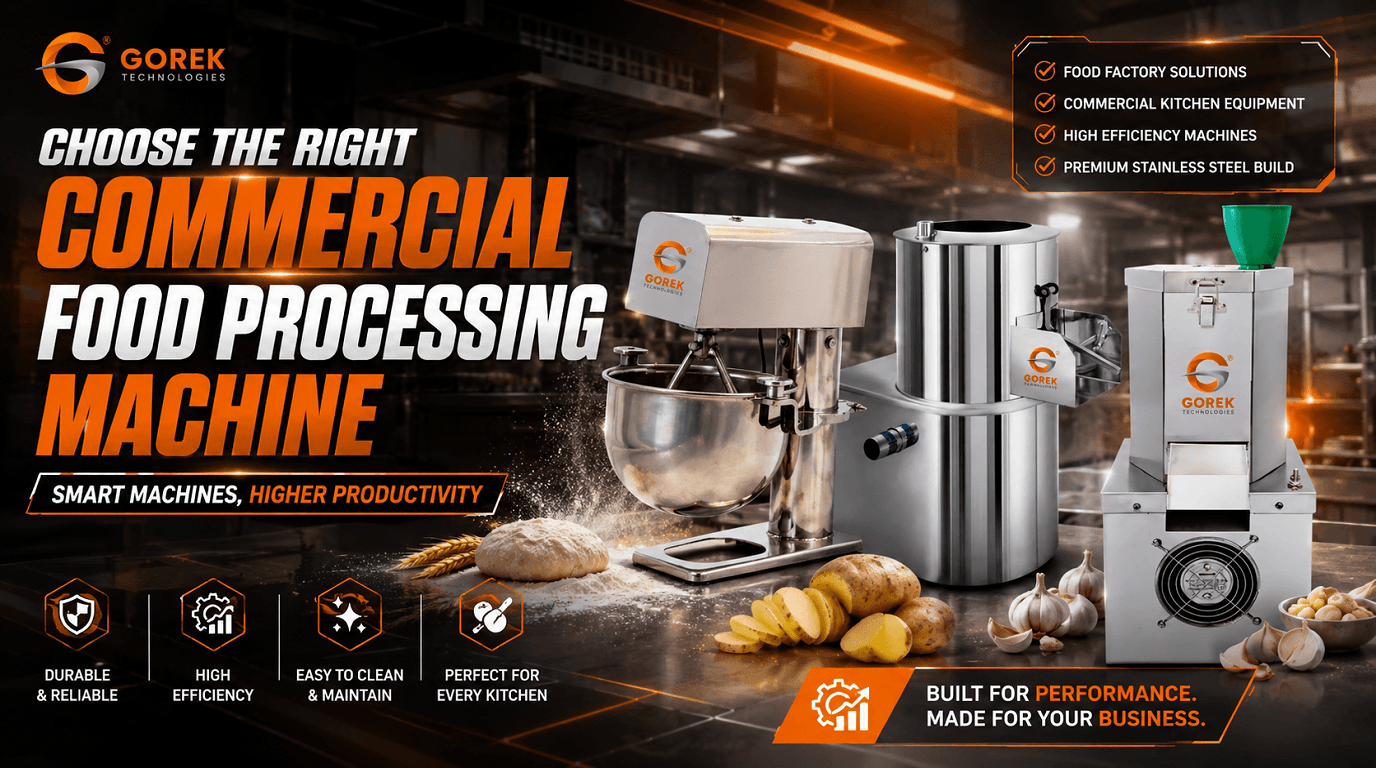
If you are running a food factory, a restaurant chain or a commercial kitchen, food processing machines are your lifeline. These machines do all the peeling, slicing, cutting, kneading, etc., so your production runs smoothly. This is why picking the right industrial food processing machines is so important for your business.
In this post we’ll walk you through the critical factors you need to consider when selecting a commercial food processing machine. We will also share some tips on what machines you must invest in to make sure your food business flourishes.
Why Does The Food Processing Machine Matter For Commercial Businesses?
Whether you are using a dough kneader machine or a potato peeler machine, it affects your business significantly. The efficiency of the food machine is directly linked to the output speed, product quality, food safety, and cost of operations. Any inefficiency causes monetary and non-monetary losses.
The following are a few reasons why you should focus on choosing the right food processing machine manufacturer to source your machines:
- An automated machine should give the same output for batch consistency
- The quality of the machine is necessary for food safety compliance
- Automated machines reduce your production costs significantly
- The food machine ensures the safety of your team
- High-performance machine reduces wastage
- Consistent quality and lower wastage lead to higher profit margins
How To Choose The Right Food Processing Machine?
Food processing machines are an expensive investment for your business. Therefore, carefully evaluate the following factors before making a big purchase:
Machine & Material Strength
The physical quality of the machine is one of the most important factors to consider, since it will determine how long and how well it will perform. Food-grade stainless steel is corrosion resistant, easy to keep clean and durable for continuous-operation, which is why reliable food processing machine manufacturers use it.
Avoid machines that use plastic or low-grade metal parts in the areas that get touched a lot. Those bits can quietly degrade over time because they have to endure moisture, cleaning chemicals, and the day-to-day mechanical stress. As a result, you might see early failure and, more worryingly, a risk of food contamination.
Technology Of The Machine
The technology used to build your food processing machine will determine its efficiency. The machine must have the advanced engineering and the controllers needed for accuracy and uniform output. You have to invest in high-efficiency machines to keep up with your evolving product mix and improve your production.
Machine Capacity
The capacity of the machine is often the most miscalculated factor when choosing food processing equipment. It is typically measured in kilograms per hour or units per hour.
You should not be selecting capacity based on the average production. Instead, find a machine that can handle 10-20% more than your peak production capacity. This means you can cope with demand spikes, seasonal peaks and growth of your company.
Additionally, if you are buying a grinder or cutter, you should ensure that the machine is compatible with your needs.
Energy Consumption
Energy is a high and often underestimated operating cost in food manufacturing. Request the full energy consumption specifications (kW/h) of the machine and calculate the anticipated annual operating cost based on your facility’s electricity rate and hours of operation. Look for equipment with energy efficient motors, VFDs that reduce power draw at partial load, and sleep or standby modes for idle periods.
Space And Layout Alignment
The most capable machine is useless if it does not fit within the physical and workflow constraints of your facility. Before you buy, map out your production floor and figure out where the machine will fit into the processes before and after it.
In designing a layout, you should also consider how to load and unload the machine, how to get rid of wastage and how to maintain it. Before you buy, be sure the size and utility needs of the machine fit the infrastructure you have in place.
Cost-Effectiveness Of The Machine
Purchase price is only one component of a machine’s true cost. The total cost of the machine also includes the cost for installation, team training, energy consumption, changing the parts of the machines, maintenance and repair.
Avoid choosing cheaper options that might need frequent maintenance and repair costs. When purchasing, check the quality of the machines and other elements to ensure they are worth the price.
Maintenance Needs
Even the best machines still need a bit of care, once in a while, so they can keep running smoothly and consistently for the long run. Take a moment to check if the maintenance means total dismantling or whether the machine just needs frequent part swapping. Also, lean toward equipment that comes with a service ecosystem that’s accessible and actually easy to maintain, not some overly complicated stuff.
Warranty On The Machine
A manufacturer’s warranty is a direct indicator of faith in their product’s quality and longevity. Commercial food processing equipment usually comes with industry-standard warranties on the full machine that run for 12 to 24 months.
Read warranty terms carefully. Understand what is covered, what voids coverage (unauthorized modifications, non-standard cleaning products, etc.), and what the response time is for warranty claims.
Post-Installation Services
Post-installation services are equally important for smooth operations. A few services offered by a reliable food processing machine manufacturer are installation support, team training for using the machine, ongoing technical support, and spare part availability. A company with unclear post-installation services should be avoided.
Which Industrial Food Processing Machines Should You Buy?
The right machines for your operation depend entirely on your product category, production volume, and processing requirements. That said, the following categories of industrial food processing equipment serve a broad range of commercial businesses and are worth considering for investment:
- Masala Grinder Machine
- Pulverizer Machine
- Vegetable Cutter Machine
- Gravy Making Machine
- Dough Kneader Machine
- Potato Peeler Machine
- Automatic Roti Maker Machine
- Garlic Peeler Machine
For most mid-to-large commercial operations, the most cost-effective strategy is to work with a single trusted supplier who can assess your full production workflow and recommend an integrated piece of equipment that meets your needs.
Gorek Technologies is the top food processing machine manufacturer in India. We are known for our advanced engineering solutions, the quality of our machines, affordable prices, and post-installation services. Explore our products or contact us for a demo.
Conclusion
Choosing the right commercial food processing machine is one of the most impactful decisions your business will make. Use the factors mentioned in this guide to evaluate machine strength and materials, understand the technology, size for peak capacity, calculate the total cost of ownership, and verify the post-purchase support before you make the big investment in machines for your business. Gorek Technologies offers the best quality food processing equipment for a wide range of activities. Contact us for more information.
FAQs
How do I choose a Food Processing Machine?
When selecting a food processing machine, you should consider what you are processing, what output you need and what your facility can accommodate in terms of space, power and budget. Then you can compare machines across nine critical metrics: quality of construction and materials, technology, capacity, energy consumption, space and layout fit, total cost of ownership, maintenance needs, warranty terms, and post-installation support.
Can food processing machines be customized?
Yeah, most reputable manufacturers of industrial food processing machines do have customization options, especially for commercial buyers, and for the bigger lot purchases too. What they usually tweak is the machine dimensions a bit so it fits your floor plan, and they can also sort out a special blade setup for more specific cut types, like when you need a particular profile.
Which material is best for industrial food processing machines?
Stainless steel, of food-grade quality, is one of the best materials for durability, hygiene, and to prevent contamination from the machine’s material. Do not buy machines in commercial use that use plastic, aluminium, and cheap metal in high-wear areas or places where food comes in contact due to contamination and low durability.
Which is the best food processing machine manufacturer?
Gorek Technologies is the best food processing machinery manufacturer because of its advanced solutions and affordable prices. Additionally, we also use the best parts of the machine to reduce maintenance needs and offer post-installation services. Thus, our customers get the best results. Contact us to know more.