
Pulverizer Machine Buying Guide 2026: How to Choose the Right Machine for Your Business

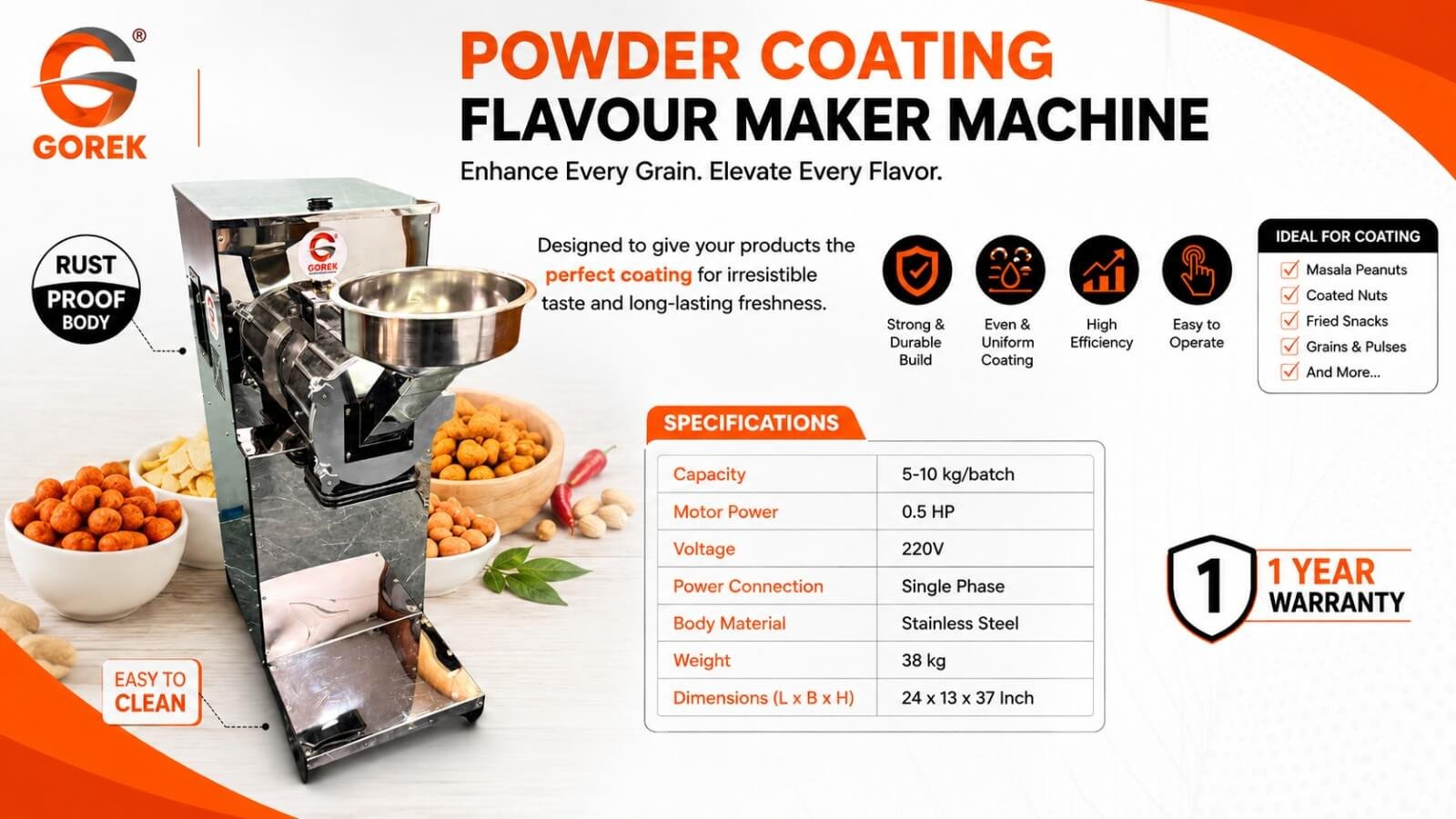
A Pulverizer Machine is the heart of most production units, especially in the food processing and pharma industries. Pulverizer plays a vital role in the quality of the final product. Therefore, choosing the right machine is vital.
A pulverizer or a food processing machine costs you thousands of rupees. When you are making such an investment, the buying process becomes a little more complex. That’s why we have created this guide to help you buy a pulverizer machine that fits your needs and budget.
What Is A Pulverizer Machine?
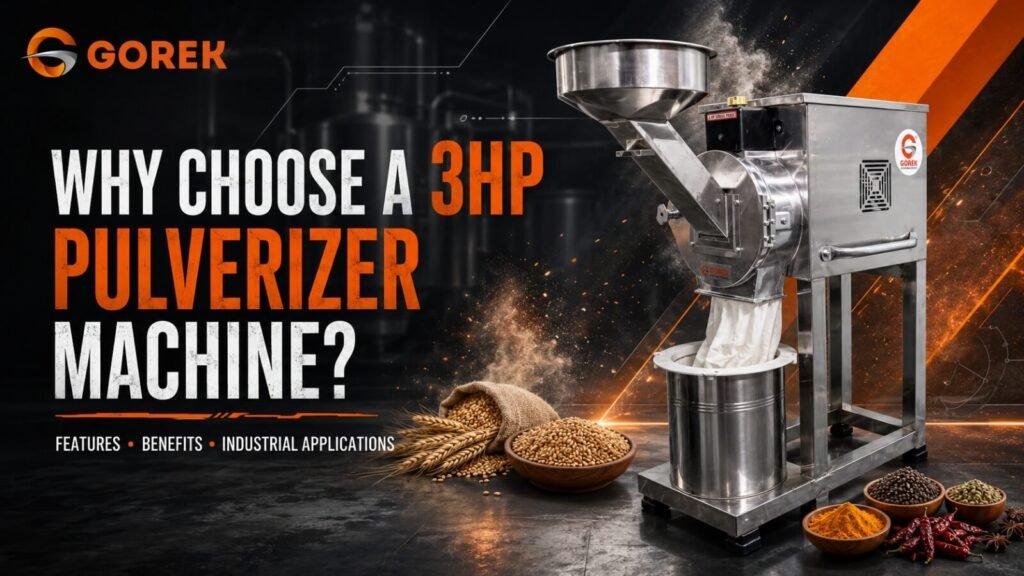
A pulveriser machine is an industrial processing device that uses mechanical action to reduce or pulverise solid materials to a fine powder or granular form. The food and pharma industry extensively use the finer powder which is made from the solid raw material.
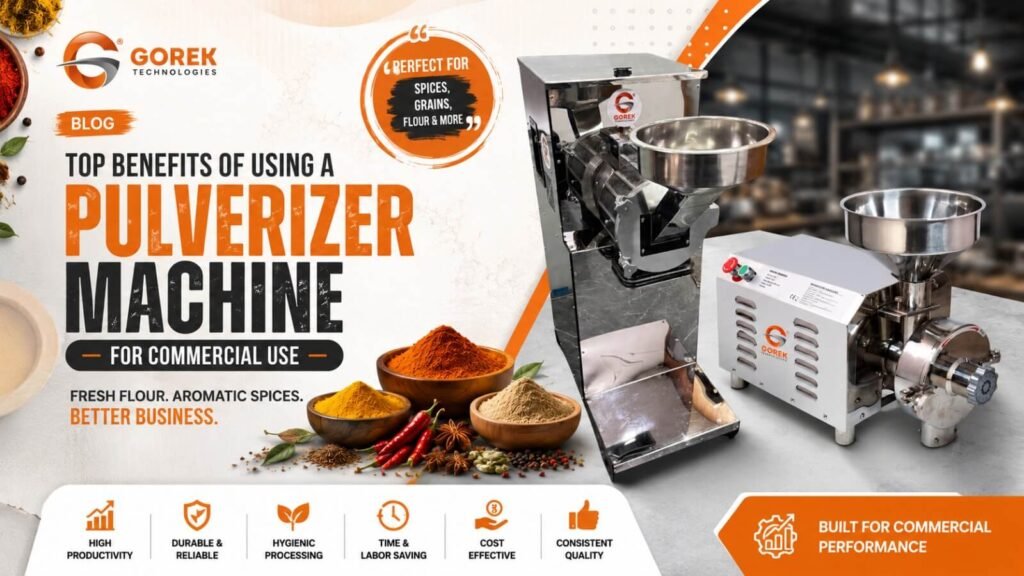
Our Pulverizer machine is designed for processing spices into finer Masal (powder). You will find a wide range of masala pulverizer machines for home and commercial use. You can choose based on your needs. Read this post till the end to find useful tips to choose the right machine for your company.
What Does Choosing The Right Pulverizer Machine Matter?
Choosing the right machine leads to more than just financial loss. It affects your operational efficiency, raw material wastage, and damage to brand image if faulty products get out in the market. Let’s explore a few more reasons for investing your time in choosing the right spice pulverizer machine.
Production efficiency
An unfit machine leads to batch failure, excessive use of the machine, and frequent maintenance. Whether it’s an undersized or oversized machine, both cases lead to wastage of material and energy used to power the system. Additionally, if your machine doesn’t meet your output capacity, it will slow you down and make meeting deadlines harder.
Quality consistency
Consistency is the key factor especially in the food industry. The customer satisfaction and brand image depends on the particle size and texture of the output of the spice pulveriser machine.
Cost of maintenance
The cost of the pulveriser machine is not the only cost you incur. And there are costs for spare parts, energy consumption, maintenance and unplanned downtime. So go for a sturdy machine which has easy maintenance and energy saving technology to cut down the cost of owning.
Regulatory compliance
Using a non-compliant machine can result in production shutdowns, product recalls, penalties, and reputational damage. The correct pulveriser machine must meet applicable safety and food-grade standards.
How To Choose The Right Pulverizer Machine In 2026
The following is a guide to evaluate, shortlist, and confidently select the best pulverizer machine for your specific business requirements.
Define your capacity requirement
Choose a machine that matches the per shift and per day processing patterns. Define how many hours the machine will run and what the expected output should be each shift/day. Thus, you can get an estimated capacity requirement.
To determine your capacity, calculate your average output and projected demand for 3 – 4 years. That way, your machine can scale as your business grows. You have to see the size of the motor and the cooling requirements of the machine for smooth production.
Material compatibility
All materials have different physical and chemical properties that make the right type of pulveriser. Some important properties to consider are hardness, moisture content, oil or fat content (for spices and food ingredients), abrasiveness and heat sensitivity. Choose a machine compatible with the processing of your raw material.
Check the specifications of the machine
Once you are sure of the material, it’s time to check the technical specifications of your masala pulverizer machine. Pay close attention to these specs because they affect the longevity of the machine.
The following is the list of primary specs that you must check:
- Construction material for the machine: Ideally, stainless steel for durability and compliance
- Contramination prevention design: Must have air-tight seal bearings to prevent contamination
- Mesh or plate sizes: Different sizes of mesh or plates should be available to adjust the fineness of the masalas
- Motor type: Verify motor kW rating, speed (RPM), single-phase or three-phase compatibility, and whether a variable frequency drive (VFD) is included for speed control
Ask for the estimated cost of ownership
The cost of ownership includes purchase price, installation and commissioning costs, estimated annual maintenance cost, key spare parts prices, average energy consumption per hour (kWh), and expected machine lifespan. Calculated the ownership cost over the long term to determine if it’s worth the investment. A machine priced 20% higher but with 50% lower maintenance costs is usually the smarter investment for high-volume operations.
Ensure it meets the safety compliances
Safety compliance is a prerequisite for any food processing company. Therefore, you should also invest in machines that comply with the necessary standards, such as FSSAI, and have relevant certificates.
Check maintenance requirement
Maintenance is essential for the longevity of any food processing machine. Therefore, you need to choose a machine that is designed for long-duration processing and requires minimal maintenance apart from daily cleaning.
The following are a few questions that you can ask to check the maintenance requirements of a pulverizer machine:
- How can I clean the grinding chamber and seals of the machine?
- How frequently do the spare parts, like blades, hammers, and liners, need to be changed?
- What is the estimated downtime per maintenance cycle?
- Are parts available locally or only imported?
- Does the machine design allow quick change of spare parts without specialized tools?
Ask for a demo
A demo reveals the machine’s actual output quality, particle size consistency, noise levels, vibration characteristics, ease of operation, and how quickly it can be cleaned between batches. Reputable manufacturers will offer factory trials or on-site demonstrations. Be cautious of suppliers who decline demo requests or offer only generic product videos.
Check the after-sales services
Your relationship with your pulveriser machine supplier doesn’t end at delivery. Long-term performance depends on good after-sales service. Ensure the manufacturer has a good response time to your queries, technical support, access to good quality spare parts and annual maintenance support. See their reviews to find out if they keep their word.
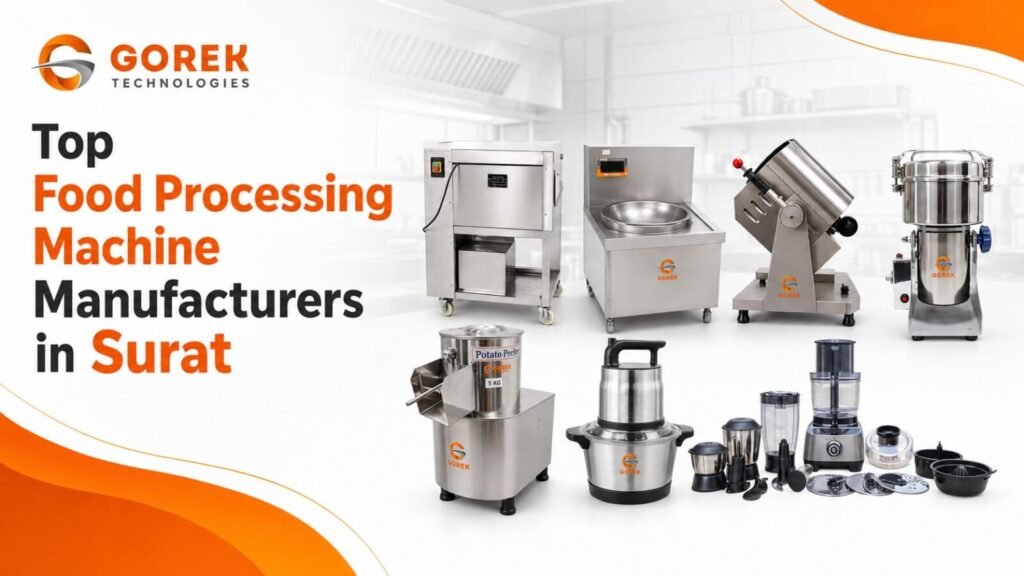
Gorek Technologies is one of the best food processing machine manufacturers. We are manufacturing machines from Pulverisers to Samosa Making Machines and other such machines with latest engineering designs for best performance. Our machines are made of stainless steel and quality motors for the best ROI. To learn more, please contact us.
Conclusion
Buying a pulverizer machine is a strategic choice that affects your product quality, raw material wastage, labor costs, and scale with your business. Therefore, the wrong one will drain resources, generate downtime, and compromise your competitive position. We shared 8 tips to ensure that you can choose the right spice pulverizer machine. This guide focuses on capacity, material compatibility, checking specifications of the machine, and after-sales services. So take the time to shortlist two or three machines, ask for detailed quotations, arrange trials and compare full cost-of-ownership figures before making a commitment.
FAQs
What are the different types of pulverizer machines?
The pulveriser machines are different depending on the technology. Pulveriser Machines Types The types of Pulveriser Machines are Hammer Mills, Pin Mills, Disc Mills, Ball Mills and Jet Mills. The best type depends on your material, the required particle size, production volume and whether you need dry or wet grinding.
Which is better, a pulverizer or a grinder?
A grinder is usually used to reduce the material to coarse or medium particle sizes and is found commonly in kitchens, spice processing and small scale operations. A pulveriser machine gives much finer particle sizes and is used in industrial settings where powder uniformity is a must.
Which company’s food processing machines are best?
The best company depends on your specific application, required capacity, budget, and geographic location. However, if you are looking for the best food processing machine, Gorek Technologies is one of the best choices for you. We use advanced technology and designs to create high-efficiency machines offering consistent output.
What are common pulverizer problems?
Some common problems with poorly designed pulveriser machines are overheating, mesh/plate/screen clogging, excessive vibration, inconsistency in product output and bearing failure. Opting for the right manufacturer and scheduling routine maintenance can help you avoid most of these problems. Gorek Technologies has created designs to avoid these problems and keep your operations running smoothly.